H-2B Construction Jobs in the USA: $20–$27 an Hour With Visa Sponsorship
H-2B construction and landscaping jobs in the USA: real 2026 hourly pay, the visa cap, costs employers must cover, and a step-by-step guide to applying safely.
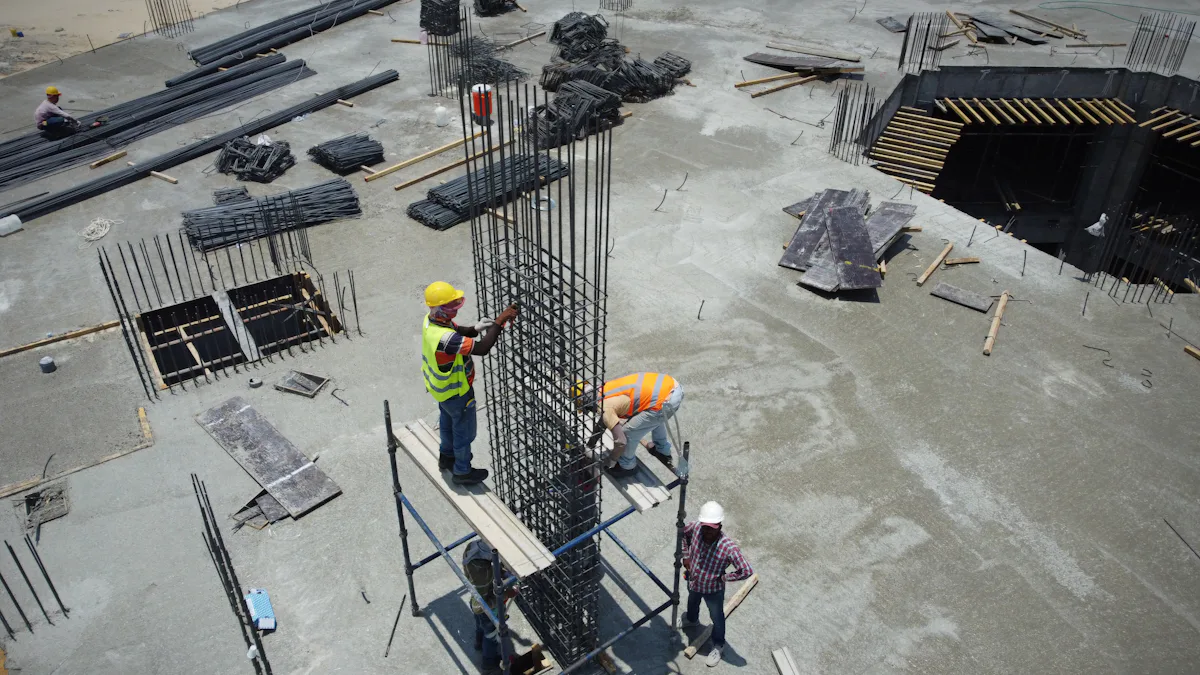
A masonry contractor in New York is offering H-2B construction laborers $21.58 to $26.00 an hour for the 2026 season, with overtime at $32.37 to $39.00. In Maine, a paving company listed $23.50 to $25.00 an hour from April to mid-November. These are real job orders on the US Department of Labor's seasonal jobs site, and they show what H-2B construction work pays: well above minimum wage, but not the $60,000 "relocation package" some websites advertise.
H-2B lets American employers hire foreign workers for seasonal or peak-load jobs that Americans aren't filling. Construction and landscaping are two of the biggest users of the program. The catch is the cap: only 66,000 visas a year, and employers fight for them.
This guide covers which construction jobs qualify, what they pay according to government data, what the employer has to pay for, and how the process actually works from job order to visa.
In this guide
- H-2B Construction Jobs at a Glance
- Which Construction Jobs Qualify for H-2B
- How Much H-2B Construction Work Pays
- Costs: What the Employer Pays and What You Pay
- The H-2B Cap: Why Timing Matters
- How the H-2B Process Works
- How to Find Real H-2B Construction Employers
- Documents Checklist
- Housing and Getting to Work
- Rights and Life on an H-2B Construction Crew
- Common Mistakes and Refusal Reasons
- Frequently Asked Questions
- Before You Apply
H-2B Construction Jobs at a Glance
| Item | Details |
|---|---|
| Who it's for | Laborers, masons, concrete workers, roofers, landscapers and other trades with seasonal demand |
| Typical pay | About $20–$27 an hour in 2026 job orders, overtime at time-and-a-half |
| BLS benchmark | Construction laborers and helpers median: $46,680 a year ($22.44/hour), May 2025 |
| Season length | Usually 6–10 months, often spring to late autumn |
| Annual cap | 66,000 (33,000 per half year), plus any supplemental visas |
| Visa fee | $205, which the employer must reimburse |
| Path to green card | Not built in; H-2B is temporary |
| Official source | USCIS H-2B page |
Which Construction Jobs Qualify for H-2B
H-2B is not tied to a list of occupations. The test is the employer's need. The job must be temporary, falling into one of four types: seasonal, peak-load, intermittent or one-time. In construction, that usually means work that slows sharply in winter.
Common H-2B construction and outdoor jobs
- Construction laborers: site cleanup, digging, carrying materials, operating basic equipment, helping trades.
- Paving and sealcoating crews: asphalt work that stops in cold weather.
- Masons and concrete workers: brick, block and stone work, pouring and finishing concrete.
- Roofers: especially in northern states with short building seasons.
- Landscaping and groundskeeping workers: the single largest H-2B occupation overall, covering lawn installation, hardscaping, planting and snow-season shutdown.
- Pool construction, fencing and irrigation installers.
What usually does not qualify
Year-round construction jobs with no seasonal pattern rarely pass the Labor Department's temporary need test. Licensed trades like electricians and plumbers appear less often, because most states require a state licence that foreign workers cannot easily get within a season. If an ad offers you an H-2B "electrician" job with no mention of licensing, ask questions.
How Much H-2B Construction Work Pays
The wage rules
H-2B employers must pay at least the highest of three figures: the prevailing wage for the job in that area, the federal minimum wage, or the state or local minimum wage. The prevailing wage comes from the Occupational Employment and Wage Statistics survey and is updated each July. The employer must also offer at least 35 hours a week for the job to count as full-time.
BLS median pay for common trades
| Occupation | BLS median annual pay (May 2025) | Median hourly (2025) |
|---|---|---|
| Construction laborers and helpers | $46,680 | $22.44 |
| Carpenters | $60,580 | $29.12 |
| Masonry workers | $58,270 | $28.02 |
| Roofers | $55,440 | $26.65 |
| Landscaping and groundskeeping workers | About $39,100 (hourly × 2,080 hours) | $18.82 |
| Tree trimmers and pruners | About $51,000 (hourly × 2,080 hours) | $24.50 |
These medians are for full-year workers, including experienced Americans. H-2B newcomers usually start near the prevailing wage, which for laborers in many 2026 job orders sits between $20 and $27 an hour.
What a season really earns
| Scenario | Weekly pay before tax | 32-week season |
|---|---|---|
| $22/hour, 40 hours | $880 | About $28,000 |
| $24/hour, 40 hours plus 8 overtime hours at $36 | $1,248 | About $40,000 |
| $26/hour, 40 hours plus 12 overtime hours at $39 | $1,508 | About $48,000 |
Overtime depends on weather and workload. Rain days mean fewer hours. The employer must guarantee you work for at least three-quarters of the hours promised over the contract, though federal enforcement of that rule has been limited by Congress since 2016.
Taxes come out of every paycheck: federal income tax, state income tax in most states, and Social Security and Medicare. Budget for rent, food and a phone. In the Northeast, shared housing near job sites is expensive in summer, when tourists compete for rooms.
Costs: What the Employer Pays and What You Pay
| Cost | Who pays |
|---|---|
| Labor certification and USCIS petition fees | Employer |
| Lawyer and recruitment costs | Employer |
| Visa application fee ($205) | Employer must pay or reimburse in your first workweek |
| Visa integrity fee, if collected | Treated as a visa-related fee; ask the employer to confirm reimbursement |
| Inbound travel and travel meals | Employer reimburses once you complete 50% of the season, earlier if minimum wage law requires |
| Return travel home | Employer, if you complete the season or are dismissed early |
| Required tools and safety gear | Employer |
| Passport | You |
| Rent and food in the US | You, unless the job order says housing is provided |
The visa integrity fee was created by Congress in 2025 at a minimum of $250 per nonimmigrant visa, charged when the visa is issued. As of October 2026, collection has rolled out unevenly, so check with your US embassy whether it applies at your interview.
The H-2B Cap: Why Timing Matters
Congress sets 66,000 H-2B visas per fiscal year (October 1 to September 30). Half are for jobs starting October to March, and half for April to September. Construction jobs mostly start in spring, so they compete for the second-half numbers.
Demand far exceeds supply. Employers file labor certification applications in a three-day window in early January for April 1 start dates, and DOL has used a randomized order to process them. On September 11, 2026, USCIS announced it had already received enough petitions for the first half of fiscal year 2027.
Supplemental visas
In most recent years, the government has released extra visas. For fiscal year 2026, a rule published in February 2026 allowed up to 64,716 more, split into tranches by start date, with a large share reserved for returning workers who held H-2B status in fiscal years 2023 to 2025. The April tranche filled within weeks. Supplemental visas require new legal authority each year, so there is no guarantee of a repeat for 2027.
Cap-exempt workers
If you are already in the US on H-2B, a new petition to extend your stay or switch employers is not counted against the cap. This is why returning workers have such an advantage.
How the H-2B Process Works
- Employer requests a prevailing wage from the Labor Department, usually at least 60 days before filing.
- Employer files a temporary labor certification 75 to 90 days before the start date and posts the job order. It must recruit US workers first.
- Job order appears on SeasonalJobs.dol.gov. This is where you can see the wage, dates and duties.
- Labor Department certifies the job. The employer then files Form I-129 with USCIS, naming you or listing unnamed workers.
- USCIS approves the petition if cap numbers remain.
- You complete the DS-160 online visa form and book an interview at a US embassy or consulate.
- Interview and visa. The consular officer checks your job offer, experience and intent to return home.
- Travel. You can enter up to 10 days before the start date and must leave within the grace period after the job ends unless a new petition is filed.
From job order to arrival usually takes three to five months. Start talking to employers in autumn for spring jobs.
How to Find Real H-2B Construction Employers
- Search SeasonalJobs.dol.gov. Filter for H-2B and keywords like "construction laborer," "mason," "paving" or "landscape." Listings show the employer name, address and contact.
- Check state job banks. H-2B job orders are also posted on state workforce websites in the state of employment.
- Ask returning workers. Many crews fill through referrals from people who have worked the season before.
- Contact employers politely and directly. Send a short message with your trade, years of experience, a photo of your work if relevant, and your availability dates.
Never deal with someone who will not give you a case number, a company address you can check, or a written contract.
Documents Checklist
- Passport valid for at least six months beyond the season
- Signed job offer matching the DOL job order
- DS-160 confirmation page and appointment letter
- Employer's petition receipt or approval number
- Reference letters from past construction employers, with phone numbers
- Trade certificates or training records, if you have them
- Photos of your work (useful for masons, tilers, carpenters)
- Evidence of ties at home: family, property, a job or business to return to
Housing and Getting to Work
H-2B employers do not have to provide housing, unlike H-2A farm employers. Many construction and landscaping companies arrange shared houses or apartments for their crews and deduct rent from pay, which is allowed if it is voluntary, disclosed in the job order and not used to push your wages below the required rate. Others leave you to find your own place.
Ask before you accept: Is housing arranged? What does it cost per week? How many people share a room? How do workers get to job sites? A company van is common. If you have to buy a car in your first weeks, that can eat a month's savings.
Rights and Life on an H-2B Construction Crew
You have the same workplace safety protections as American workers, including OSHA rules on fall protection, trenching and heat. You must be paid at least every two weeks. Your employer cannot hold your passport.
You can only work for the employer that petitioned for you. Under rules in force since January 2025, if your job ends early you have a grace period of up to 60 days to find a new sponsor or leave, and you can start with a new H-2B employer as soon as it files a petition for you. The maximum continuous stay is three years, after which you must spend 60 days outside the US.
Your spouse and children under 21 can apply for H-4 visas. They cannot work. Construction workers on short seasons usually come alone.
Common Mistakes and Refusal Reasons
- Paying an agent. H-2B recruitment should cost you nothing beyond your passport. Read our guide to fake job offers and visa scams.
- Inconsistent work history. If your CV says mason but you can't explain how to mix mortar, the officer will notice.
- Weak home ties. Officers refuse H-2B visas under section 214(b) when they think you plan to stay permanently.
- Past immigration violations. Overstays, unlawful work or false documents can bar you for years.
- Being from a restricted country. A proclamation in force since January 1, 2026 bars all visas for nationals of several countries, including Haiti and Sierra Leone. Check the State Department's notice.
Frequently Asked Questions
How much do H-2B construction workers earn in the USA?
Most 2026 H-2B construction laborer job orders pay roughly $20 to $27 an hour, with overtime at one and a half times the base rate. Over a 30 to 35-week season that typically adds up to $28,000 to $48,000 before tax, depending on hours.
Do I need a degree for H-2B construction work?
No. Employers look for experience, physical fitness and the ability to follow safety instructions. Some job orders ask for three to six months of related experience.
Does the employer pay for my visa and flight?
The employer must pay or reimburse your visa fee in your first workweek and reimburse inbound travel once you finish half the season. It also pays your return travel if you complete the job or are let go early.
Can I change employers on an H-2B visa?
Yes, but only if a new H-2B employer files a petition for you. You can start working for the new employer once that petition is filed, and extensions with a new employer don't count against the cap.
Is H-2B a path to a green card?
Not directly. H-2B is temporary, and you must show you intend to return home. A small number of workers later get permanent sponsorship for full-time jobs through the EB-3 green card route, which takes years.
What are the chances of getting an H-2B visa?
Your first season is the hardest because the cap fills quickly. Workers who complete a season well and get requested again have much better odds, especially when supplemental visas are reserved for returning workers.
Before You Apply
- Look up active construction and landscaping job orders on SeasonalJobs.dol.gov and write down the case numbers.
- Put together a clear, honest CV with reference contacts and photos of your work.
- Compare H-2B with other seasonal options such as forestry and wildland fire support jobs, or trades routes in Canada like skilled trades immigration.
- Read the Labor Department's H-2B worker rights page so you know what to expect from an honest employer.
Disclaimer: This guide is general information, not legal or immigration advice. Fees, quotas and requirements change often, so confirm every detail on the official government website before you apply or pay anyone. See our editorial policy.