H-2A Farm Jobs in the USA: AEWR Pay by State, Free Housing and How Workers Get Hired
H-2A farm jobs in the USA explained: 2026 AEWR wage ranges by state, the free housing and transport employers must provide, and how foreign workers are hired.
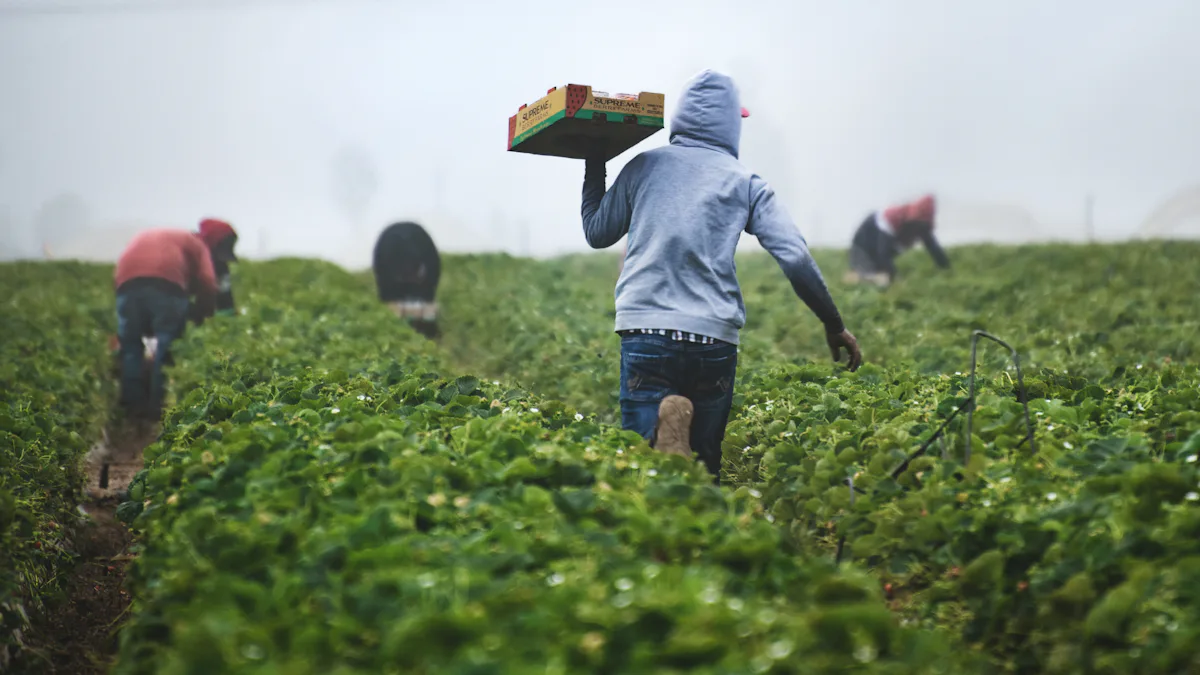
In fiscal year 2025, the US Department of Labor certified about 398,000 H-2A farm jobs. Unlike most US work visas, there is no annual cap. If a farmer can show a seasonal need and no available American workers, the visas are there.
That makes H-2A one of the most accessible legal ways to work in the United States without a degree. It also comes with protections that many farm jobs elsewhere do not offer: free housing, paid travel, a guaranteed minimum wage set by the government, and a promise of at least three-quarters of the hours in your contract.
The work is hard and the pay is modest by US standards. This guide explains what H-2A really pays in 2026, what employers must provide, and how workers actually get recruited.
In this guide
H-2A Farm Jobs at a Glance
| Item | Details |
|---|---|
| Who it's for | Adults able to do physical seasonal farm work; no degree needed |
| Pay | At least the state AEWR: roughly $9–$15/hour entry level and $13–$19/hour experienced in 2026, or a higher state minimum wage |
| Housing | Free, inspected housing provided by the employer |
| Travel | Inbound travel reimbursed after 50% of the contract; return travel paid if you finish |
| Cap | None |
| Contract length | Usually a few weeks to 10 months; under one year |
| Path to green card | None built in |
| Official source | USCIS H-2A page |
What Counts as H-2A Work
H-2A covers temporary or seasonal agricultural work. Typical jobs include:
- Harvesting fruit and vegetables: berries, apples, citrus, tomatoes, watermelons
- Planting, pruning, thinning and weeding
- Nursery and greenhouse work
- Tobacco and sweet potato work in the Southeast
- Custom grain harvesting and equipment operation across the Plains
- Livestock work on the range, including sheep and goat herding
Year-round jobs, such as most dairy work, generally do not qualify, because the need is not seasonal. Herding on the range is a special exception with its own monthly wage.
H-2A Pay: How the AEWR Works
The Adverse Effect Wage Rate (AEWR) is the minimum hourly wage H-2A employers must pay, set by the Labor Department for each state. The employer must pay the highest of:
- The AEWR
- The prevailing wage for the crop or activity
- The federal, state or local minimum wage
- Any agreed collective bargaining rate
Since October 2025, AEWRs come from government wage survey data with two levels: an entry-level rate for basic field work and a higher rate for experienced or more skilled work. The method also lowers the hourly rate to reflect the value of the free housing employers provide.
Example AEWRs for field and livestock workers (2026)
| State or measure | Level | Hourly AEWR |
|---|---|---|
| National average | Entry level | About $12.31 |
| National average | Experienced | About $16.07 |
| Mississippi (lowest entry rate) | Entry level | About $8.84 |
| New Hampshire | Entry level | About $11.69 |
| Kansas | Entry level | About $13.86 |
| Nebraska (highest entry rate) | Entry level | About $14.91 |
| Florida (lowest experienced rate) | Experienced | About $13.41 |
| West Virginia | Experienced | About $14.57 |
| Rhode Island | Experienced | About $16.78 |
| Nebraska (highest experienced rate) | Experienced | About $19.22 |
Figures as reported by the American Farm Bureau from Labor Department data for the 2026–27 wage year. Exact rates by state and occupation are on the FLAG AEWR page.
In states with high minimum wages, the state rate wins. California's 2026 minimum wage is $16.90 and Washington's is about $17, so H-2A workers there earn at least those amounts.
Piece rates and overtime
Many harvest jobs pay by the bucket, bin or box. That is allowed, but your piece-rate earnings must average at least the required hourly rate each pay period. If you pick slowly one week, the employer must top you up.
Federal law does not require overtime pay for farmworkers. Several states do, including California, Washington, New York, Oregon and Colorado, with thresholds that vary.
What a season can earn
| Scenario | Weekly before tax | 24-week season |
|---|---|---|
| $13/hour, 40 hours | $520 | About $12,500 |
| $15/hour, 48 hours | $720 | About $17,300 |
| $17/hour, 50 hours (high-wage state) | $850 | About $20,400 |
Because housing is free and transport to the fields is provided, many H-2A workers send home most of what they earn. H-2A wages are generally not subject to Social Security and Medicare tax, and federal income tax is withheld only if you ask, although you may still owe US tax at the end of the year.
What the Employer Must Provide
| Benefit | Rule |
|---|---|
| Housing | Free, meeting safety standards and inspected before you arrive |
| Meals | Three meals a day (a capped charge is allowed) or free cooking facilities |
| Daily transport | Free transport between housing and work sites |
| Inbound travel | Reimbursed once you complete 50% of the contract, earlier if minimum wage law requires |
| Return travel | Paid if you finish the contract or are dismissed early for reasons not your fault |
| Tools | Provided free |
| Three-fourths guarantee | Paid for at least 75% of the hours promised over the contract |
| Workers' compensation | Required coverage for work injuries |
| Visa fee | The $205 visa fee and related costs must be reimbursed |
See the Labor Department's H-2A worker rights page for full details.
How H-2A Workers Are Actually Recruited
Most H-2A workers do not find jobs by applying online. Recruitment usually happens through:
- Farm labor contractors and recruiting agents in Mexico, Central America, South Africa and Jamaica who work for US growers.
- Returning workers. Employers ask good workers to come back and to recommend family and neighbours.
- Grower associations that file for many farms at once.
- Government-to-government programs in some countries that pre-screen workers.
You can also see every H-2A job order on SeasonalJobs.dol.gov, with the employer's name, crop, dates, pay and housing location. Contacting employers directly is legitimate, especially if you have farm experience.
Since January 2025, H-2A is no longer limited to nationals of a designated country list. But nationals of countries under the full 2026 travel ban, such as Haiti, cannot currently get any US visa.
Step-by-Step: The H-2A Process
- Employer files a job order with its state workforce agency about 60 to 75 days before the start date.
- Employer applies for labor certification with the Labor Department at least 45 days before the start date, and housing is inspected.
- Labor Department certifies the job if no qualified US workers are available.
- Employer files Form I-129 with USCIS.
- You complete the DS-160 and book a visa interview.
- Interview at the US embassy or consulate. Bring your passport and anything the employer or agent gives you about the job.
- Travel to the farm. You can enter up to 10 days before the contract starts.
Documents Checklist
- Valid passport
- DS-160 confirmation page and appointment letter
- Employer's petition receipt number or approval details
- Copy of the job offer or work contract in a language you understand
- Proof of farm experience if the job requires it (letters, photos)
- Previous US visas, if any
You must receive a copy of your work contract no later than when you apply for the visa. Read it. It lists your pay, hours, housing and start and end dates.
Life on an H-2A Farm
Housing ranges from purpose-built dormitories to shared trailers and old farmhouses. Expect bunk beds and shared kitchens. Many farms are far from towns, so the employer usually runs a weekly shopping trip.
Heat is a real danger in summer. Drink water constantly, take shade breaks, and speak up if you feel unwell.
Your visa is tied to your employer. If a new H-2A employer files a petition for you, you can transfer. You can stay up to three years in a row, then must spend 60 days outside the US. Your spouse and children can apply for H-4 visas but cannot work, and family housing is rarely provided.
Common Mistakes and Problems
- Paying recruiters. This is illegal, and it is the most common abuse. Read our guide to visa and job scams.
- Leaving the job early. You lose your return travel and may struggle to be hired again.
- Not keeping records. Write down your hours every day so you can check your pay slips.
- Passport confiscation. Employers cannot keep your passport. This is a warning sign of trafficking.
- Visa refusals. Past overstays or working without authorisation in the US can lead to refusal.
Frequently Asked Questions
How much do H-2A workers earn per hour in 2026?
At least the AEWR for their state, which ranges from roughly $9 to $15 an hour at entry level and $13 to $19 for experienced work, or the state minimum wage if higher. In California and Washington that means about $17 an hour.
Is housing really free on H-2A?
Yes. Employers must provide housing at no cost to you, and it must pass a safety inspection. Meals are either provided for a capped daily charge or you get free cooking facilities.
Do I need experience to get an H-2A job?
Many harvest jobs accept beginners, but some employers ask for one to three months of experience in the crop. Equipment operator jobs usually need proven experience and sometimes a driving licence.
Is there a limit on H-2A visas?
No. H-2A has no annual cap, which is a major difference from H-2B. The limit is the number of employers willing to go through the certification process.
Can H-2A lead to permanent residence?
Not directly. Some workers later get year-round jobs with EB-3 sponsorship, especially in dairy and food processing, but that is a separate and slow process.
Who pays for my flight?
The employer reimburses your inbound travel once you complete half of the contract, and pays your return trip home if you finish the season.
Before You Apply
- Browse SeasonalJobs.dol.gov to see which crops, states and seasons are hiring.
- Ask returning workers in your community which employers treat people well.
- Gather proof of any farm experience.
- Compare H-2A with farm jobs in Canada and the UK Seasonal Worker visa if you have options in more than one country.
Disclaimer: This guide is general information, not legal or immigration advice. Fees, quotas and requirements change often, so confirm every detail on the official government website before you apply or pay anyone. See our editorial policy.