Live and Work in Vancouver 2026: Jobs, Salaries, Rent, Transit and BC PNP Routes
A practical 2026 guide to living and working in Vancouver: real salaries, rent by area, transit costs, work permits and how the BC PNP picks immigrants now.
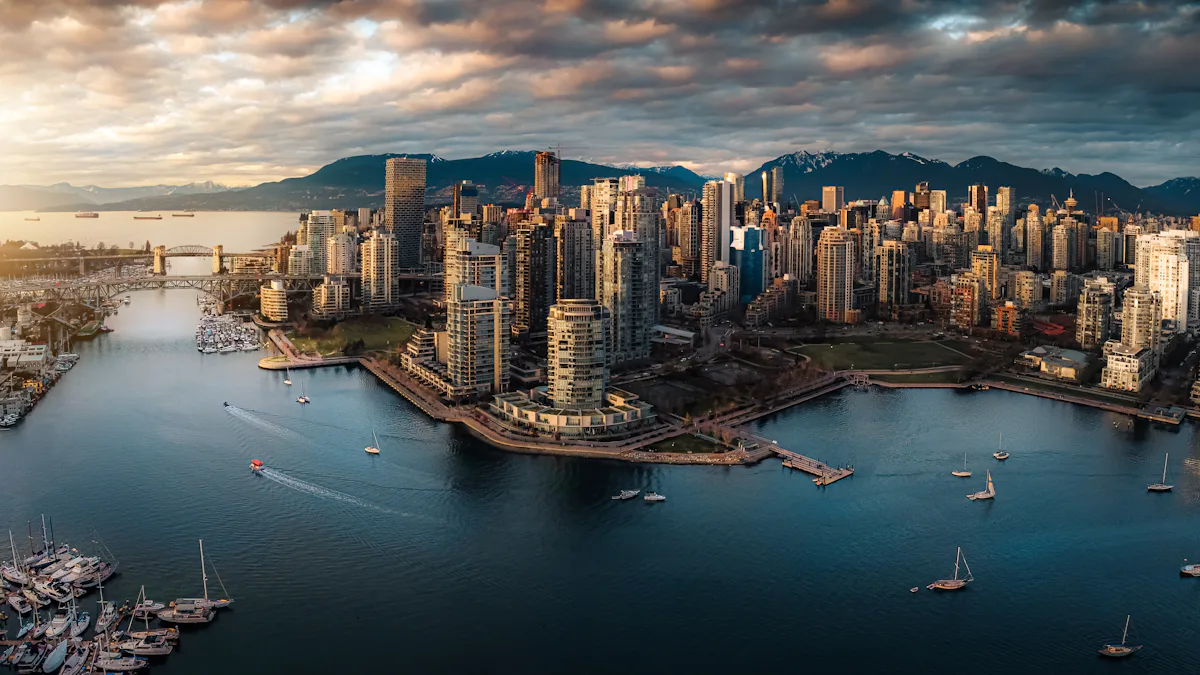
A one-bedroom apartment in Vancouver had an average asking rent of about CAD 2,373 a month in September 2026, according to the Rentals.ca national rent report. That single number shapes everything about life in this city. Salaries are good, the minimum wage is CAD 18.25 an hour, and the mountains are 30 minutes from downtown, but housing takes a bigger share of income here than almost anywhere in Canada.
Vancouver also sits inside a province that has changed how it chooses immigrants. The old BC PNP Tech draws ended in late 2024, and in 2026 the program reorganised around three priorities: care, build and innovate. If you are planning a move, you need to understand both sides: what life costs, and which route can actually get you permanent residence.
In this guide
Vancouver at a Glance
| Item | Details |
|---|---|
| Who it suits | Tech, healthcare, construction trades, film, logistics and hospitality workers |
| Minimum wage | CAD 18.25 an hour (BC, from June 1, 2026) |
| Average 1-bedroom asking rent | About CAD 2,300 to 2,400 a month (Rentals.ca, 2026) |
| Sales tax | 5% GST + 7% PST |
| Transit pass | CAD 117.20 a month for 1 zone (TransLink, from July 2026) |
| Main PR route | BC PNP (Care, Build, Innovate) and Express Entry |
| BC PNP application fee | CAD 1,750 (Skills Immigration, from January 2026) |
| Official source | WelcomeBC: BC PNP invitations |
The Job Market in Metro Vancouver
Metro Vancouver has close to 3 million people across cities like Vancouver, Burnaby, Surrey, Richmond and Coquitlam. Most newcomers live and work across several of these, not just the City of Vancouver.
The main sectors hiring are:
- Technology: software, video games, visual effects and clean tech, concentrated downtown, in Mount Pleasant and in Burnaby.
- Healthcare: hospitals and long-term care across the region, run by health authorities that recruit nurses, care aides and allied health staff.
- Construction and trades: housing, transit and port projects keep electricians, carpenters and plumbers in demand.
- Film and TV: one of North America's biggest production hubs, though work is project-based and swings with the industry.
- Port and logistics: Canada's largest port, plus warehousing in Delta, Richmond and Surrey.
- Tourism and hospitality: hotels, restaurants and cruise season work.
The labour market is tougher than it was a few years ago. The Vancouver census metropolitan area had an unemployment rate of 7.0% in the federal table used for LMIA decisions from October 2026. That matters for immigration, because Service Canada will not process most low-wage LMIA applications in areas at 6% or higher. Healthcare, construction and food processing jobs are exempt.
What People Earn
These are BC provincial medians from Job Bank (2023 to 2024 reference period). Metro Vancouver pay is usually close to or slightly above these.
| Occupation | BC median (CAD/hr) | Approx. yearly at 40 hrs |
|---|---|---|
| Software developer | 52.40 | 109,000 |
| Registered nurse | 47.58 | 99,000 |
| Welder | 35.00 | 73,000 |
| Electrician | 34.00 | 71,000 |
| Licensed practical nurse | 34.57 | 72,000 |
| Truck driver | 30.77 | 64,000 |
| Nurse aide / care aide | 27.89 | 58,000 |
| General farm worker (harvesting) | 18.25 | 38,000 |
Rent and Where People Live
Vancouver's rental market loosened in 2025. CMHC reported that the purpose-built vacancy rate rose to 3.7%, the highest since 1988, as new rental buildings opened. Rents have flattened, but they are still the highest in the country.
| Area | Typical 1-bedroom rent (CAD/month) | Notes |
|---|---|---|
| Downtown, West End, Kitsilano | 2,500 to 3,000+ | Walkable, close to tech and tourism jobs |
| East Vancouver, Mount Pleasant | 2,100 to 2,600 | Popular with younger workers |
| Burnaby (Metrotown, Brentwood) | 2,200 to 2,600 | On SkyTrain, many new towers |
| Richmond | 2,000 to 2,500 | Close to airport, Canada Line |
| Surrey, Coquitlam, New Westminster | 1,800 to 2,300 | Cheaper, longer commutes |
| Basement suites (anywhere) | 1,400 to 2,000 | Common for newcomers; check legality and utilities |
These are estimates based on 2026 listing data and change month to month. Shared housing is very common: renting a room typically costs CAD 900 to 1,400.
In BC, landlords can only raise rent once every 12 months, with three months' notice, and by no more than the provincial cap. The 2026 cap is 2.3%. This protects existing tenants, but landlords can set any rent for a new tenancy.
Monthly Costs for a Single Newcomer
| Expense | Estimate (CAD/month) |
|---|---|
| Rent (room in shared house to 1-bedroom) | 1,000 to 2,400 |
| Utilities and internet | 100 to 200 |
| Phone plan | 40 to 70 |
| Transit pass (1 zone) | 117 |
| Groceries | 400 to 550 |
| Other spending | 200 to 400 |
| Total | About 1,850 to 3,700 |
For a fuller comparison with Toronto, Calgary and Montreal, see our cost of living in Canada guide.
Getting Around: Transit
TransLink runs SkyTrain (Expo, Millennium and Canada lines), buses, SeaBus and the West Coast Express. Fares rose about 5% on July 1, 2026.
- 1-zone adult monthly pass: CAD 117.20
- 2-zone: CAD 156.70
- 3-zone: CAD 211.65
- Adult DayPass: CAD 12.55
Buses are always one zone. You pay with a Compass card or by tapping a bank card or phone. Many workers in Surrey or Coquitlam commute 45 to 75 minutes each way, which is why living near a SkyTrain station is worth paying a little more for.
Work Permits for Vancouver Jobs
Most newcomers arrive on one of these:
- Employer-specific work permit with an LMIA. High-wage LMIAs still work in Vancouver. Low-wage LMIAs are largely blocked because of the unemployment threshold, unless the job is in an exempt sector.
- LMIA-exempt permits. Intra-company transfers, CUSMA professionals, Global Talent Stream roles and some francophone mobility jobs.
- Post-graduation work permit after studying at a BC institution.
- Spousal open work permit if your partner is a skilled worker or eligible student. See our spousal open work permit guide.
The BC PNP in 2026
What changed
BC used to run dedicated tech draws for a list of priority technology occupations. The last of those was held in December 2024. In 2026, the program refocused on three objectives:
- Care: healthcare, childcare (early childhood educators) and veterinary care.
- Build: priority construction trades.
- Innovate: "High Economic Impact" invitations for top talent in any sector, including tech.
Tech workers now mostly compete in Innovate draws. Recent ones have been either wage-based or points-based. On the WelcomeBC invitations page, September 2026 Innovate draws included a wage-based round with a CAD 105,000 threshold and a points-based round at a minimum of 131 points. August 2026 used a CAD 110,000 threshold. Those are high bars: in practice, Innovate rewards senior, well-paid roles.
Who has the best chance
- Nurses, care aides, ECEs and allied health workers with a BC job offer (Care draws).
- Experienced trades workers with a BC employer (Build draws).
- High earners with a strong BC job offer (Innovate draws).
How it works
- Get a qualifying BC job offer. Most Skills Immigration categories require a full-time, indeterminate offer from a BC employer.
- Register a profile in the BC PNP online system and receive a score.
- Wait for an invitation. Draws target specific priorities, not just the highest scores.
- Apply within the deadline and pay the CAD 1,750 fee.
- Receive nomination and apply for PR through Express Entry (if linked) or a paper-based federal application.
BC's 2026 nomination allocation was reported as 5,254 at the start of the year, with an extra 1,000 spaces granted in August 2026. That is far smaller than in 2024. Expect competition. Our PNP guide compares BC with other provinces.
Life After Arrival
- Get a SIN at a Service Canada office or online once you have your permit.
- Apply for BC's Medical Services Plan (MSP) immediately. There is a waiting period of up to three months, so buy private insurance to cover that gap.
- Open a bank account and build credit with a secured card.
- Use free settlement services. Immigrant-serving agencies across Metro Vancouver offer job search help, language classes and housing advice at no cost to permanent residents, and some services are open to temporary residents.
- Get credentials recognised early. Trades, nursing, engineering and teaching are regulated in BC.
Frequently Asked Questions
Is Vancouver too expensive for a newcomer?
It is expensive but manageable if you share housing at first or live further out along SkyTrain. A single person needs roughly CAD 2,000 to 3,700 a month, depending mainly on rent. Many newcomers start in Surrey, Burnaby or a basement suite.
Does BC PNP still have a tech stream?
No. The dedicated BC PNP Tech draws ended in December 2024. Tech workers now compete in Innovate (High Economic Impact) draws, which in 2026 have used wage thresholds above CAD 100,000 or a points cut-off.
Can I move to Vancouver without a job offer?
You can if you already have PR or an open work permit. For most BC PNP categories, you need a BC job offer. Express Entry candidates can land without a job, but should arrive with savings for several months of rent.
What is the minimum wage in Vancouver?
BC's general minimum wage is CAD 18.25 an hour from June 1, 2026. It is adjusted each year based on inflation.
Can employers in Vancouver still hire foreign workers on low-wage LMIAs?
Mostly not, while the Vancouver area's unemployment rate is at or above 6%. Healthcare, construction, food processing and primary agriculture are exempt. High-wage LMIAs are still processed.
How long does the BC PNP take?
After an invitation, BC aims to process applications within a few months, and federal PR processing adds several more. Plan for 12 to 20 months from invitation to PR, depending on whether you use Express Entry.
Before You Apply
- Search Job Bank and health authority job boards for Vancouver jobs in your field, and compare the posted wages with the BC PNP draw thresholds.
- Budget at least three months of rent plus a deposit before you arrive.
- Check whether your occupation is regulated in BC and start credential recognition now.
- Follow the WelcomeBC invitations page so you know which priorities are being drawn.
Disclaimer: This guide is general information, not legal or immigration advice. Fees, quotas and requirements change often, so confirm every detail on the official government website before you apply or pay anyone. See our editorial policy.