US Tourist Visa (B1/B2) 2026: DS-160, Fees, Interview Questions and 214(b) Refusals
Apply for a US B1/B2 visitor visa in 2026: the DS-160, the $185 fee and visa integrity fee, interview questions, documents and how to avoid a 214(b) refusal.
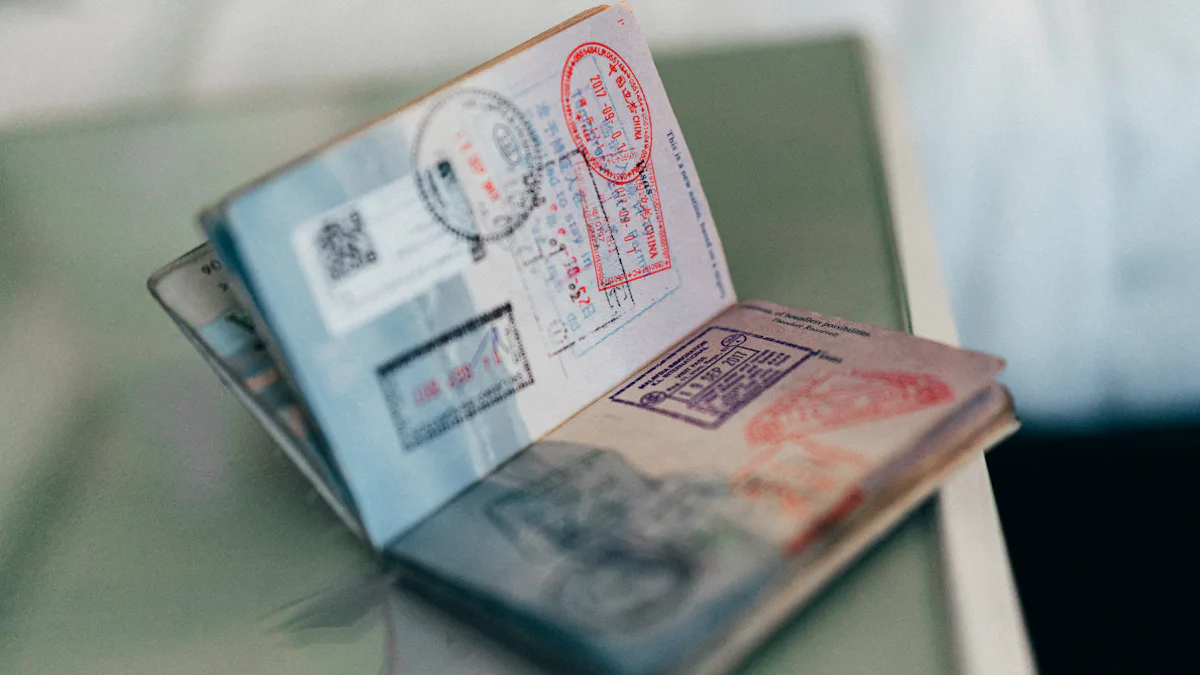
Most US visitor visa interviews last less than three minutes. In that time a consular officer decides whether you have given them reason to believe you will go home. If not, you get a slip of paper citing section 214(b) of the Immigration and Nationality Act, and the $185 application fee is gone.
The rules around B1/B2 visas tightened through 2025 and 2026. Interview waivers were cut back, applicants must apply in their own country of nationality or residence, a new visa integrity fee is being phased in, and nationals of some countries face suspensions or visa bonds. The basics of a good application have not changed, though.
This guide covers the process step by step, the real costs, what officers ask, and why most refusals happen.
In this guide
- US B1/B2 Visitor Visa at a Glance
- B1 vs B2: What You Can and Cannot Do
- Who Needs a B1/B2 Visa
- 2026 Changes You Must Know
- Step-by-Step: How to Apply
- Documents Checklist
- Common Interview Questions
- Why 214(b) Refusals Happen
- Long Waiting Times: What You Can Do
- Life With a US Visitor Visa
- Frequently Asked Questions
- Before You Apply
US B1/B2 Visitor Visa at a Glance
| Item | Details |
|---|---|
| Who it's for | Tourists, people visiting family, business visitors attending meetings or conferences, and medical treatment |
| Application form | DS-160 online nonimmigrant visa application |
| Application fee | $185 (non-refundable) |
| Visa integrity fee | At least $250 at visa issuance, being phased in; check your embassy |
| Interview | Required for most first-time applicants |
| Typical stay | Up to 6 months per entry, set by the border officer |
| Work allowed | No |
| Official source | travel.state.gov visitor visa page |
B1 vs B2: What You Can and Cannot Do
The visa is usually issued as a combined B1/B2.
| Allowed on B1 (business) | Allowed on B2 (tourism) | Not allowed |
|---|---|---|
| Meetings with business partners | Tourism and holidays | Any paid or unpaid work for a US employer |
| Attending conferences | Visiting friends and relatives | Studying for credit |
| Negotiating contracts | Medical treatment | Working as crew or journalist (separate visas) |
| Settling an estate | Short recreational courses | Giving birth mainly to get US citizenship for the child |
People who plan to look for work, then change status once in the US, are the classic misuse case. Officers know this pattern.
Who Needs a B1/B2 Visa
If your country is in the Visa Waiver Program, such as the UK, most of the EU, Japan, South Korea or Chile, you can usually travel with an ESTA instead. Everyone else, including nationals of Nigeria, Ghana, Kenya, India, Pakistan, the Philippines, Brazil, Mexico and most Caribbean countries, needs a visa.
2026 Changes You Must Know
- Interview waivers narrowed. Since October 1, 2025, most applicants need an in-person interview, including children and older adults. Waivers remain mainly for some B1/B2 renewals filed within 12 months of the previous visa expiring, where that visa was full validity and you were at least 18 when it was issued.
- Apply where you live. Since September 2025, you should apply in your country of nationality or residence. Booking in a neighbouring country to skip a long queue usually no longer works.
- Visa integrity fee. Congress created it in 2025 at a minimum of $250 per visa, paid when the visa is issued, so refused applicants do not pay it. As of October 2026, rollout has been uneven across embassies.
- Travel ban. Since January 1, 2026, B visas are suspended for nationals of about 39 countries under full or partial restrictions, including Nigeria, Senegal, Côte d'Ivoire, Tanzania, Zimbabwe, Haiti and Venezuela. Check the State Department's notice.
- Visa bonds. A pilot program lets officers require a bond of $5,000, $10,000 or $15,000 from B visa applicants of listed countries, about 50 countries by April 2026. It was scheduled to end in August 2026, so check whether it has been extended.
- Paid faster appointments. A pilot lets some applicants pay an extra $750 for an interview within 10 business days. It started in Mexico in July 2026 and runs until December 31, 2026, and does not guarantee approval.
Step-by-Step: How to Apply
- Complete the DS-160 at the State Department's Consular Electronic Application Center. Save your application ID; the system times out.
- Upload a photo meeting US visa photo rules (white background, no glasses).
- Pay the $185 fee through your country's official visa appointment system.
- Book your interview. Waiting times vary from weeks to many months depending on the embassy.
- Prepare your documents (see the checklist below).
- Attend the interview. Fingerprints are taken, then you speak to an officer.
- Get the decision. Approved passports are kept for visa printing and returned by courier. Refused applicants get their passport back with a letter.
Documents Checklist
You must bring:
- Passport valid for at least six months beyond your planned stay
- DS-160 confirmation page with barcode
- Fee payment receipt and appointment confirmation
- Old passports with previous US or other visas
Bring, even though the officer may not ask:
- Employment letter stating your job, salary, start date and approved leave
- Recent payslips and bank statements (three to six months)
- Business registration and tax records if self-employed
- Proof of property, family or study commitments at home
- Invitation letter from US hosts, with their status, if visiting family
- Conference registration or meeting letter for business visits
- Rough itinerary and hotel booking, if you have one
Documents rarely win a case on their own. Your answers matter more.
Common Interview Questions
| Question | What the officer is really checking |
|---|---|
| What is the purpose of your trip? | Is it a genuine short visit? |
| How long will you stay? | Is the length reasonable for your purpose and leave from work? |
| Who will you visit? | Family members who overstayed or have pending immigration cases |
| What do you do for work? | Stable job and income to return to |
| Who is paying for the trip? | Can you or your sponsor afford it? |
| Have you travelled abroad before? | Did you return on time from past trips? |
| Are you married? Do you have children? | Family ties at home |
Answer briefly, directly and honestly. Do not recite memorised speeches. If you don't understand a question, ask the officer to repeat it.
Why 214(b) Refusals Happen
Section 214(b) says every visitor visa applicant is presumed to be an intending immigrant until they prove otherwise. A refusal under it means the officer was not convinced, not that you did something wrong. The most common reasons:
- Weak ties at home. Young, single, unemployed or newly employed applicants are refused most often.
- Unclear trip purpose. "Just to see America" for three months with no plan.
- Finances that don't add up. A large deposit just before the interview, or a trip cost far above your income.
- Inconsistent answers. What you say differs from your DS-160 or documents.
- Family in the US. Relatives who overstayed, or a pending immigrant petition for you.
- Past violations. Overstays, unauthorised work or previous misrepresentation.
There is no appeal. You can reapply at any time with a new DS-160 and fee, but reapplying with the same profile usually gets the same result. Wait until something meaningful has changed: a better job, longer employment, completed travel to other countries, or a clearer purpose.
Long Waiting Times: What You Can Do
Interview waits differ enormously. The State Department says the global average is about a month, but some embassies have queues of more than a year. A few practical steps:
- Book early. Pay the fee and take the first available date, then plan your trip around it, not the other way round.
- Check for cancellations. Appointment systems often release new slots. Logging in regularly is legal and free; paying a stranger to "find" a slot is not safe.
- Request an emergency appointment only for real emergencies, such as urgent medical treatment or a close relative's funeral, with proof.
- Do not book a third country unless you legally live there. Since September 2025, applications outside your country of nationality or residence are usually turned away.
Life With a US Visitor Visa
The visa lets you travel to a US port of entry. The border officer decides whether to admit you and for how long, usually up to six months. Check your admission record (Form I-94) online after you arrive, and leave before the date shown.
Visa validity depends on reciprocity with your country. In 2025 the US cut validity for some countries, including Nigeria, to single-entry visas valid for three months. Overstaying even by days can cancel your visa and damage future applications.
Frequently Asked Questions
How much does a US tourist visa cost in 2026?
The application fee is $185, paid before your interview and not refunded if you are refused. If the visa integrity fee is being collected at your embassy, at least $250 more is charged when the visa is issued. Nationals of some countries may also be asked for a visa bond.
Can I apply for a US visa in another country?
Generally no longer. Since September 2025 the State Department expects you to apply in your country of nationality or where you legally live, with limited exceptions.
What is a 214(b) refusal?
It means the officer was not satisfied that you will leave the US after your visit. It is not a permanent ban; you can reapply when your situation has changed.
How long can I stay in the US on a B1/B2 visa?
The border officer usually admits visitors for up to six months, but can give less. Your exact departure date is on your I-94 record.
Can I work in the US on a visitor visa?
No. Any work for a US employer, paid or unpaid, is prohibited. If you want to work, look at routes like the H-2B visa or the J-1 exchange programs.
Does a family invitation letter help?
It helps explain your trip but does not prove you will return. Officers focus on your own job, finances and ties at home.
Before You Apply
- Check the current interview waiting time and any travel ban or bond rules for your nationality.
- Gather proof of your job, finances and family ties before booking the interview.
- Fill in the DS-160 slowly and keep a copy so your answers match at the interview.
- If you are also considering other countries, compare the Canada visitor visa and the UK Standard Visitor visa.
Disclaimer: This guide is general information, not legal or immigration advice. Fees, quotas and requirements change often, so confirm every detail on the official government website before you apply or pay anyone. See our editorial policy.